Most manufacturing dashboards are hiding the problems they were built to reveal
This whitepaper exists to confront an uncomfortable reality in modern manufacturing:
Many leadership teams believe they are in control because their dashboards look sophisticated. Most are not.
Despite widespread investment in digital dashboards, analytics platforms, and real-time reporting, a large number of manufacturing organisations continue to experience the same losses, the same firefighting, and the same surprises, only now with better screens to watch them happen.
The objective of this paper is to expose the silent failure of dashboards that report performance but conceal truth.
Specifically, this whitepaper aims to:
Reveal how aggregated metrics systematically hide the real sources of loss
Challenge the assumption that “visibility” equals “control”
Demonstrate how dashboards often delay intervention rather than trigger it
Show why many factories look stable on screens while quietly bleeding on the shop floor
Help CEOs distinguish between dashboards that inform and dashboards that deceive
This is not a technology critique. It is a leadership warning.
Because in today’s manufacturing environment, the greatest operational risk is not lack of data — it is false confidence built on incomplete intelligence.
This whitepaper is written for leaders who would rather face inconvenient truths today than explain avoidable failures tomorrow.
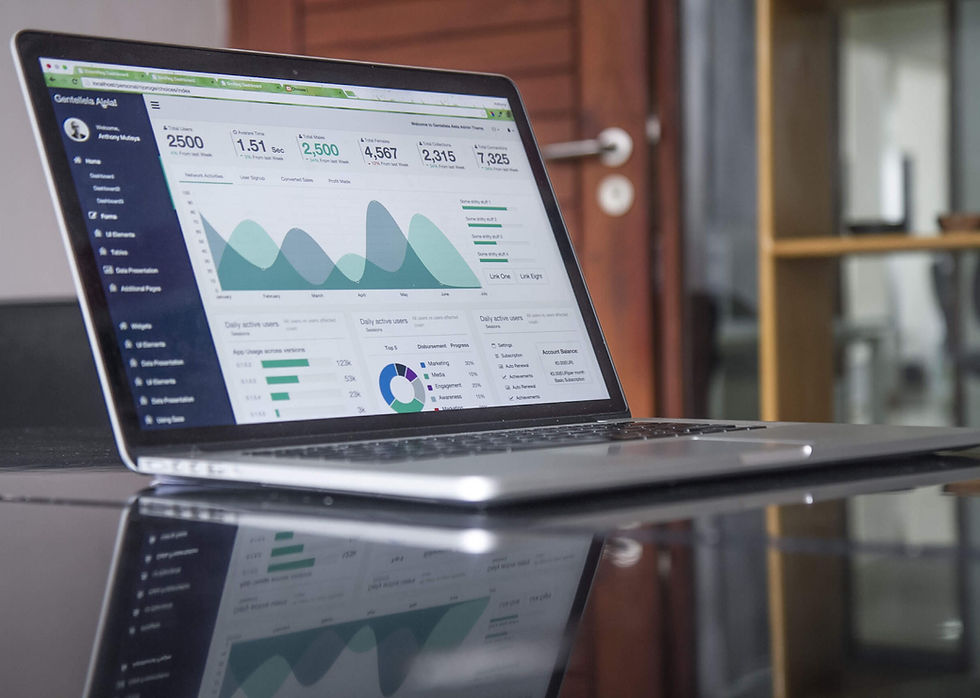
The Dashboard Illusion: Visibility Without Insight
Dashboards were supposed to make factories transparent.
Instead, many have created a false sense of control.
Typical symptoms:
Leaders “see” OEE but cannot explain why it fluctuates
Losses are visible only in aggregate, never at source
Daily reviews happen but corrective actions repeat
The same problems appear every month with new explanations
This happens because most dashboards are built to answer the wrong question:
“How are we performing?”Instead of“Why are we performing this way and what must change now?”
Dashboards today excel at descriptive analytics. Manufacturing needs diagnostic and prescriptive intelligence.
Missing Loss Intelligence at the Right Granularity
Most dashboards show:
Overall OEE
Line-level efficiency
Daily output vs plan
Top 5 downtime reasons
What they rarely show:
Station-level losses
Micro-stoppages below reporting thresholds
Cumulative impact of “small” deviations
A 2-minute stop here. A speed loss there. A quality hold that “resolved itself.”
Individually invisible.Collectively devastating.
When dashboards aggregate losses too early, they erase causality.
What world-class systems do differently
Track losses at the point of occurrence
Preserve raw loss data before aggregation
Allow slicing by shift, crew, SKU, tooling, and condition
Convert “noise” into patterns
Until dashboards surface micro-losses, improvement will remain anecdotal
Missing Decision Ownership Embedded in the Dashboard
Most dashboards answer what happened. Almost none answer who must act.
As a result:
Data is reviewed, not owned
Deviations are discussed, not corrected
Escalations happen too late
A dashboard without ownership is just a digital notice board.
What is missing
Clear decision thresholds
Defined response protocols
Named decision owners
Time-bound action expectations
For example:
At what variance does a supervisor intervene?
When does maintenance get pulled in—immediately vs end of shift?
Who has the authority to stop production for quality?
Without this logic embedded, dashboards remain passive observers.
Missing Time as a Performance Variable
Most dashboards are obsessed with totals.
Total downtime. Total output. Total rejection.
What they ignore is time behaviour.
Critical questions dashboards rarely answer:
How long did it take to detect the problem?
How long before the first corrective action?
How long until normalcy was restored?
In manufacturing, reaction time often matters more than loss size.
Two plants can have identical downtime. One recovers in minutes.The other bleeds for hours.
Dashboards must expose:
Detection delay
Response delay
Recovery curves
Without this, organisations optimise outcomes—but not responsiveness.
Missing The Gap Between Planning and Execution
Most dashboards show:
Plan vs Actual
Schedule adherence
Dispatch performance
What they don’t show:
Why plans were unrealistic?
Which constraints invalidated the plan?
How execution deviated hour-by-hour?
As a result, planning errors get disguised as execution failures.
True performance dashboards must:
Surface planning assumptions
Highlight constraint violations
Show re-planning logic transparently
Otherwise, operations teams keep paying the price for planning optimism.
Missing Maintenance as a Live Variable, Not a Postmortem
In most dashboards, maintenance appears:
As downtime reports
As MTTR / MTBF charts
As historical analysis
But manufacturing does not fail in hindsight. It fails in the present.
What dashboards usually miss:
Asset readiness for today’s plan
Condition signals that predict near-term failure
Spare availability vs risk exposure
Skill readiness of maintenance teams
World-class dashboards treat maintenance as a first-class planning constraint, not a reporting function.
Until then, breakdowns will continue to look “sudden.”
Missing Quality Intelligence at the Point of Value Creation
Quality dashboards typically show:
Rejection percentages
Defect Pareto charts
Customer complaints
What they fail to show:
Where defects were actually created
How early they could have been detected
Which process drift caused them
As a result:
Quality is inspected, not controlled
Containment replaces prevention
Learning cycles remain slow
Dashboards must push quality intelligence upstream to stations, operators, and process conditions, not downstream to reports.
Missing Human Behaviour Signals
Factories do not run on data alone. They run on people interpreting data.
Most dashboards ignore:
Shift-wise behavioural patterns
Crew-specific performance variance
Skill vs outcome correlations
Workarounds hidden behind “numbers look fine”
This leads to a dangerous myth:
“The system is fine; people are the problem.”
In reality, dashboards often hide behavioural signals that leaders should see.
Advanced dashboards correlate:
Who was running the process
Under what conditions
With what results
Not to blame—but to learn.
The Core Problem: Dashboards Built for Reporting, Not Thinking
Most dashboards are designed by:
IT teams optimising data flow
Vendors optimising features
Consultants optimising visual appeal
Very few are designed by people who have run factories under pressure.
As a result, dashboards answer safe questions:
How much?
How many?
Compared to yesterday?
Manufacturing leadership needs dashboards that answer uncomfortable questions:
Why did this happen here?
Why does it keep repeating?
Why did no one intervene sooner?
What will break next?
Until dashboards evolve from mirrors to thinking systems, performance will plateau.

Reframing the Dashboard: From Display to Decision System
The future of manufacturing dashboards lies in five shifts:
From aggregation to granularity
From visibility to accountability
From totals to time-based intelligence
From historical to predictive signals
From reporting to learning
This does not require more data. It requires better questions embedded into the system.
Conclusion: The Brutal Truth CEOs Must Accept
If your organisation has dashboards but still:
Debates root causes every month
Relies on heroics to recover performance
Struggles to sustain improvements
Feels surprised by problems that “came out of nowhere”
Then the issue is not execution. It is what your dashboards are not telling you.
The competitive advantage in manufacturing will not come from having dashboards.
It will come from having dashboards that force truth, trigger action, and accelerate learning, especially when performance looks “acceptable.”
And that is the part most organisations are still missing.


Comments