Employee Survey: The Ultimate Tool to Building an Engaged, High-Performing Workforce
- Jun 14
- 4 min read
In today’s competitive business environment, employee engagement is no longer a “nice-to-have.” It is a strategic necessity. Organizations that understand what employees think, feel, and need are better equipped to improve productivity, retention, innovation, and workplace culture.
An employee survey is one of the most effective tools for gathering these insights. When designed and executed properly, employee surveys help leaders make informed decisions, strengthen trust, and create a workplace where people thrive.

What Is an Employee Survey?
An employee survey is a structured questionnaire used by organizations to collect feedback from employees about various aspects of the workplace. These surveys can measure:
Employee engagement
Job satisfaction
Leadership effectiveness
Communication quality
Work-life balance
Training and development needs
Company culture
Compensation and benefits
Diversity, equity, and inclusion (DEI)
Employee well-being
The goal is simple: understand the employee experience and identify opportunities for improvement.
Why Employee Surveys Matter
Many organizations rely on assumptions about what employees want. Employee surveys replace assumptions with data.
Key benefits of employee surveys
Improve Employee Engagement
Engaged employees are more motivated, productive, and committed to organizational success. Surveys help identify factors that drive or hinder engagement.
Reduce Employee Turnover
High turnover is costly. Surveys uncover early warning signs such as dissatisfaction, burnout, or lack of growth opportunities, allowing companies to take corrective action.
Strengthen Workplace Culture
Surveys provide insights into how employees perceive the organization’s values, leadership, collaboration, and overall culture.
Enhance Leadership Effectiveness
Feedback helps managers and leaders understand how their actions impact teams and where they can improve communication, support, and decision-making.
Support Data-Driven Decisions
Instead of guessing, organizations can prioritize initiatives based on real employee feedback and measurable trends.
People Alignment & Change Assessment
Identify hidden resistance, people misalignment, performance hinderance, organisational change readiness and helps improve EBITDA. Know More about PACA

Types of Employee Surveys
Different surveys serve different purposes. Choosing the right type depends on your objectives.
Employee Engagement Survey
Measures emotional commitment, motivation, and connection to the organization.
Pulse Survey
Short, frequent surveys (monthly) that capture real-time sentiment and track changes over time.
Employee Satisfaction Survey
Focuses on how satisfied employees are with their job, compensation, work environment, and benefits.
Onboarding Survey
Evaluates the new employee experience and identifies gaps in the onboarding process.
Exit Survey
Collects feedback from departing employees to understand reasons for leaving and improve retention strategies.
360-Degree Feedback Survey
Gathers feedback about an employee or leader from peers, direct reports, managers, and sometimes customers.
People Alignment & Change Assessment
Unlike traditional engagement surveys that measure only sentiment, PACA is a scientific assessment that uncovers:
People Perception Variance
Change Readiness
Functional Alignment
Strategic Implementation Risk
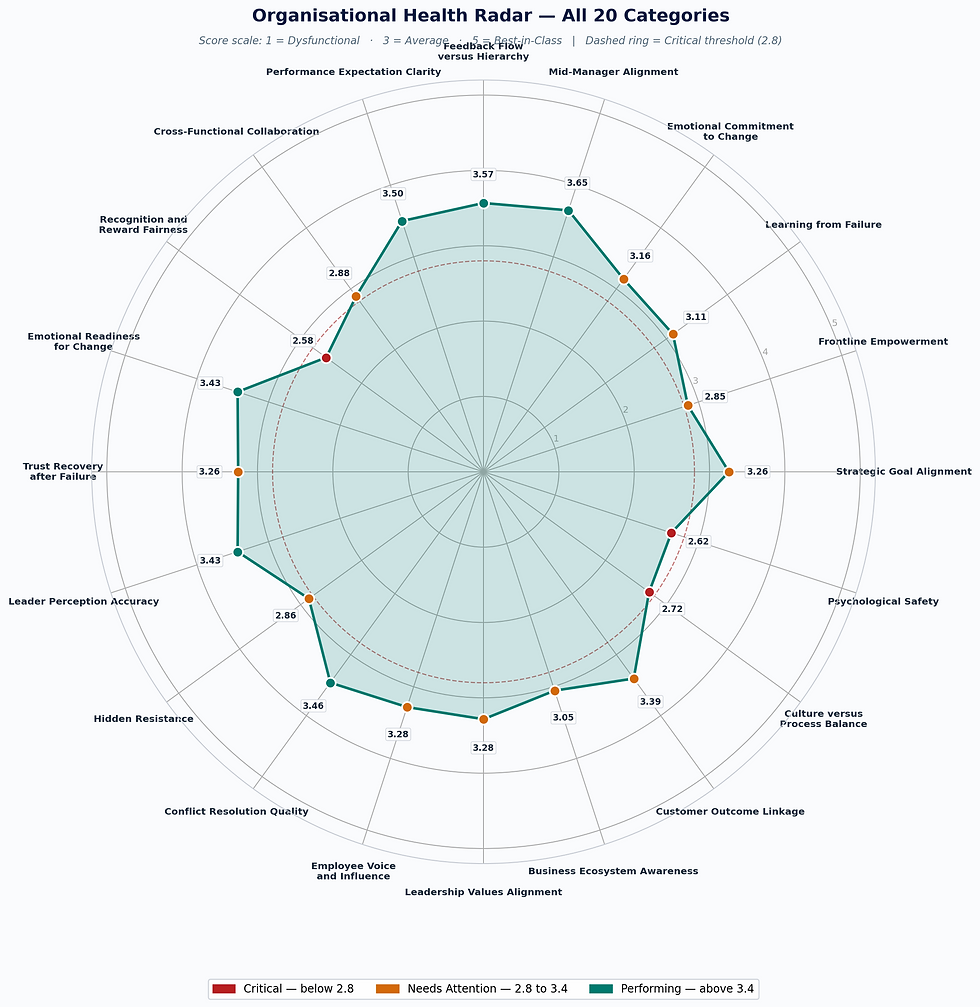
It's a 20 Behaviour Aspects, 380 Behaviour patterns deep assessment to quantify organisational people challenges as never before. Know More about PACA
How to Increase Employee Survey Participation
Low participation can skew results and reduce the value of the survey. Here’s how to boost response rates.
1. Communicate the Purpose
Explain why the survey matters, how feedback will be used, and how it benefits employees.
2. Keep Surveys Short and Relevant
Respect employees’ time by asking only meaningful questions.
3. Guarantee Anonymity
Reassure employees that responses are confidential and won’t be used against them.
4. Make It Easy to Complete
Use mobile-friendly platforms and allow employees to complete the survey during work hours.
5. Share Results and Take Action
Employees are more likely to participate when they see that feedback leads to real improvements.
From Employee Survey Data to Action
Survey data without a response plan is an expensive exercise in futility. The most common reason employees stop participating in surveys is that they saw nothing change after the last one. Action planning is not a post-survey add-on; it must be built into the survey design from the outset.
Traditional Employee Survey | PACA |
Measures satisfaction | Measures alignment |
Measures engagement | Measures belief |
Identifies concerns | Identifies execution risks |
Focuses on current state | Focuses on future readiness |
Tracks sentiment | Tracks transformation success factors |
Why Traditional Employee Surveys Are No Longer Enough
For decades, organizations have relied on employee surveys to understand engagement, satisfaction, and workplace culture. While these surveys provide useful insights, they often measure only what employees are willing to say.
The challenge is that many transformation failures are not caused by poor strategy, weak technology, or lack of resources. They are caused by misaligned beliefs, hidden resistance, and unspoken concerns that traditional surveys fail to uncover.
An employee may indicate satisfaction with their role while privately believing that leadership cannot deliver the company's vision. Another may rate communication positively yet have little confidence in the change initiative being implemented.
This is where a new generation of organizational diagnostics is emerging.
PACA: The Next Evolution of Employee Surveys
People Alignment & Change Assessment™ (PACA) goes beyond traditional employee engagement surveys by measuring the factors that determine whether strategy execution will succeed or fail.
Instead of only asking whether employees are satisfied, PACA evaluates:
Alignment with organizational vision
Trust in leadership
Readiness for change
Belief in transformation initiatives
Cross-functional collaboration
Cultural consistency
Change adoption risks
Organizational energy and momentum
Resistance hotspots
Leadership credibility
PACA helps organizations understand not just what employees think, but what they believe.
Conclusion
Employee surveys are far more than a feedback tool—they are a strategic asset for building a stronger, more engaged workforce. By listening to employees, analyzing insights, and taking meaningful action, organizations can improve culture, performance, retention, and overall business success.
The most successful companies treat employee feedback as an ongoing conversation, not a one-time event. When employees feel heard and valued, they are more likely to contribute their best work and stay committed to the organization’s mission.


Comments